Any self-respecting film festival worth its salt programs not just the latest buzzy awards contenders or the most intriguing international dramas, but a hefty, horny, hair-raising midnight program. And so, the Chicago International Film Festival’s After Dark program this year played host to a bevy of creature features, genre thrillers, and folk-horror freakouts.
Among the program’s other highlights include “Mum, I’m Alien Pregnant,” “HotSpring Shark Attack: Great Kyushu Showdown,” and the gloopy French “Species,” which basically asks, “What if we did ‘The Substance’ for young professional burnout?” But this dispatch from the fest’s genre program focuses on the intersection of queerness and horror (and, in one case, DIY shot-on-video drama), finding lonely terror (and bittersweet comfort) in the complexities of queer life, longing, and identity.
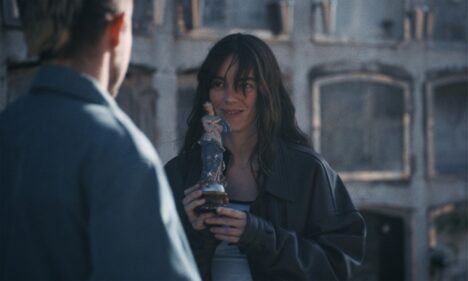
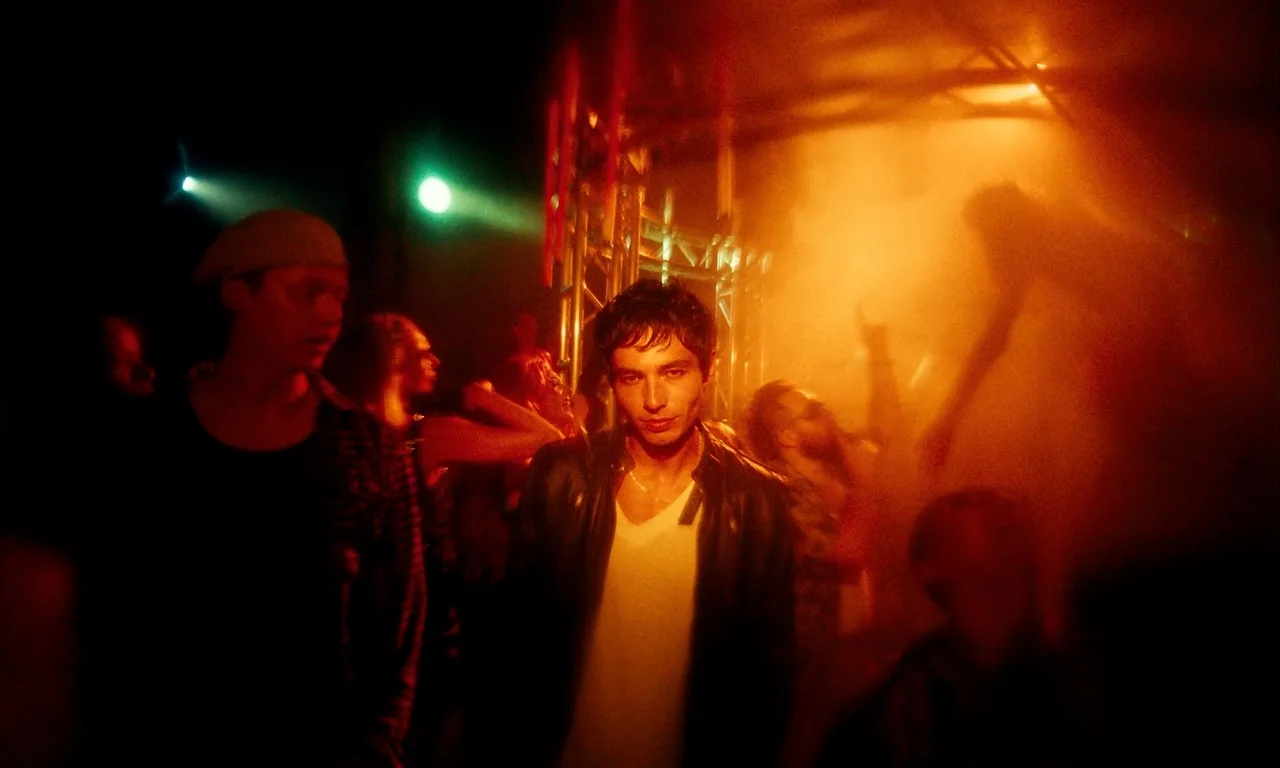
After a haunting prologue at a photoshoot featuring a young model named Cammy (Nuha Jes Izman) and a mysterious metal mask whose purpose remains opaque (“It’s important in this industry to show you can be edgy”), Corrin Evans’ “Corpus” plops us in the sweat and neon of the 1990s New York City club scene. Amid the club drugs and thumping house music, we find Sayo (Jeff Wahlberg), a twinkish photographer who spots his on-again, off-again paramour, an up-and-coming actor named Vince (Brodie Townsend), and sweats when he’s called over to hang out.
He’s played this will-they-won’t-they game with Vince for years, and he’s deeply confused about what the boy wants. Besotted anyway, he reluctantly takes Vince up on his offer to bring him and their mutual bestie Ross (Michael Vlamis) to a rotten old mansion upstate. The grounds are occupied by a famous photographer named Billie (“Roswell” alum Lily Cowles, who produces as well), who, along with her lover Cata (Ching Valdes-Aran) and the aforementioned Cammy (who suddenly seems, well, like a different person), wants to spend the weekend doing drugs, talking art, and having sex.
The vibes, shall we say, are off from the beginning, and Tayo can sniff it out; but he’s also drawn in by Vince’s smoldering sexuality, and the possibility of getting back together (as long as he plays along with the swinging scenario) makes him weak. Especially dangerous, mind you, given the trio’s true intentions, wanting the boys’ bodies in more ways than one.
Evans, a former intimacy coordinator, captures the furtiveness of queer lust in Sayo and Vince’s mutual predation; in the club scenes, Evans slows down every flash-bulb snapshot of Sayo’s probing camera, showing the blur of bodies in motion in a manner not unlike “Dredd”‘s Slo-Mo. It’s a remarkable tonal shift from that mass of bodies to the pastoral, folk-horror mix of serenity and menace in “Corpus”‘s primary mansion setting, with its falling leaves and crackling bonfires around which our boys watch our girls sing pagan folk songs.
But, in keeping with Evans’ former occupation, “Corpus” seems preoccupied with the horror of coerced consent, and what can happen when we say “yes” to something we’re not entirely sure of. It’s slinky, sexy, and more than a little surprising: The third-act reveal of just what our girls have in mind for the boys turns the film into a tangle of mistaken identities, suspenseful chases, and “Under the Skin”-like body horror.
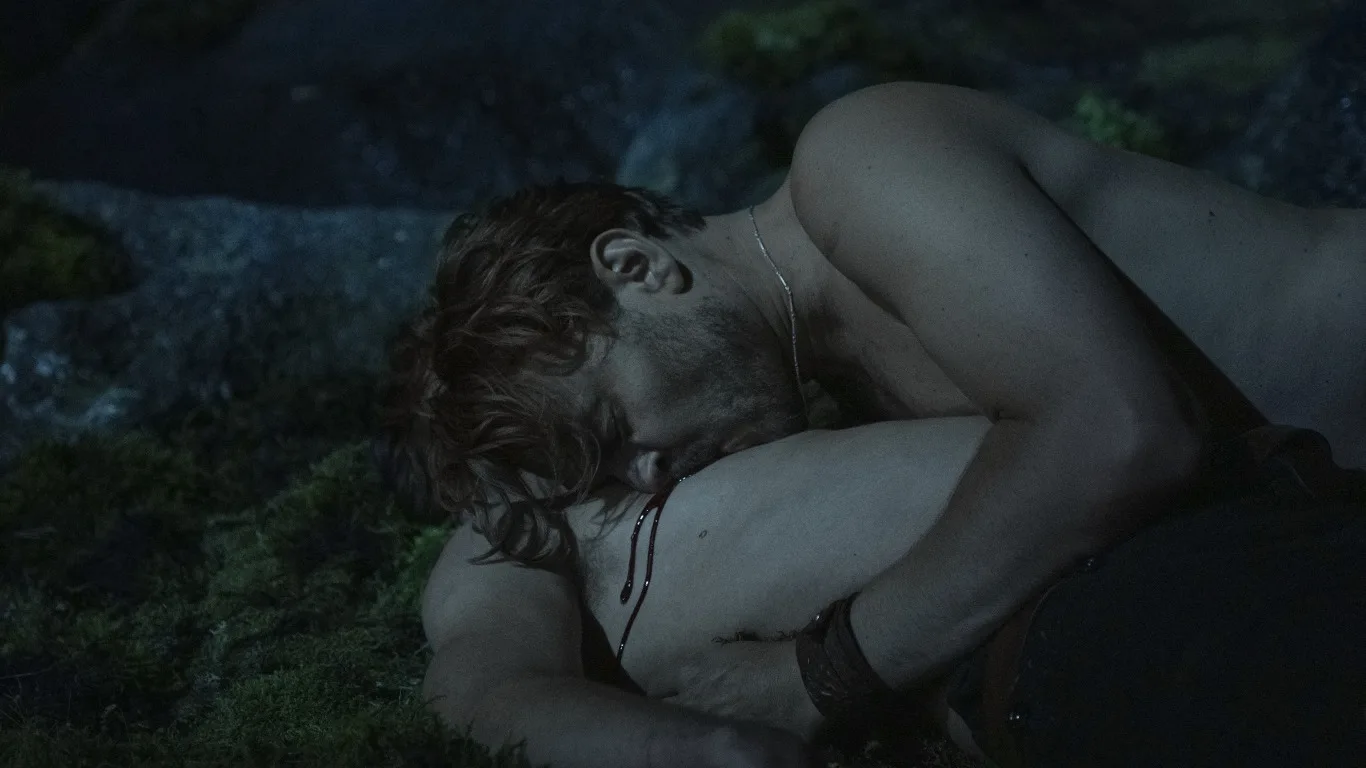
Speaking of furtive queer romance, Kasper Kalle’s “No Rest for the Wicked” blends the vampire story with a Nordic tale of forbidden love, thick with foggy Gothic atmosphere. Set in the 1860s on the remote Faroe Islands of Denmark, the film situates us in the small fishing village contained therein, in which hunky young fisherman Baldur (Egor Venned, a Faroese model for whom this is his acting debut) whiles away his days tending to his mother, Asla (Sofia Molsoe), going to church, and praying for a better life.
One day, salvation comes in an unexpected way: After getting lost in the fog and crashing his boat, he’s rescued by the brawny Danish whaler Helge (Pilou Asbæk), who returns with him and stays at their home. He’s charismatic, welcoming, and more than a little alluring, for both mother and son. But eventually, it’s Baldur’s gaze he clearly lusts after, and the two start a furtive affair, Helge representing the possibility of escape from their cloistered island, a life of freedom.
In this first half, “No Rest for the Wicked” could be confused for a fairly terrestrial affair: No ghosts, no goblins, nothing spooky save a couple of unsettling dreams Baldur has off and on. But when Helge’s body washes ashore after a shipwreck, and Baldur’s grief leads him to an ill-advised wish marked with blood (“Dear God, let him come back”), Kalle’s film takes on a folk-horror twist that literalizes the immortality of queer love—even as its focus shifts frustratingly away from our queer lovers and more towards Asla and the confused townspeople who suddenly must deal with this new plague (and, subtextually, get over their homophobic hangups).
Cinematographer Jacob Moller expertly captures the crisp, foggy beauty of the Faroe Islands (where this was shot), alongside the lilting tones of Faroese band Hettarher to sell the isolated air of Baldur’s yearning. It moves at the pace of a historical drama, its flashes of the supernatural only accentuating the desire and sweetness of Baldur and Helge’s love. Really, it’s the townspeople, and their religion-fueled ignorance, that proves “No Rest for the Wicked”‘s true terror.
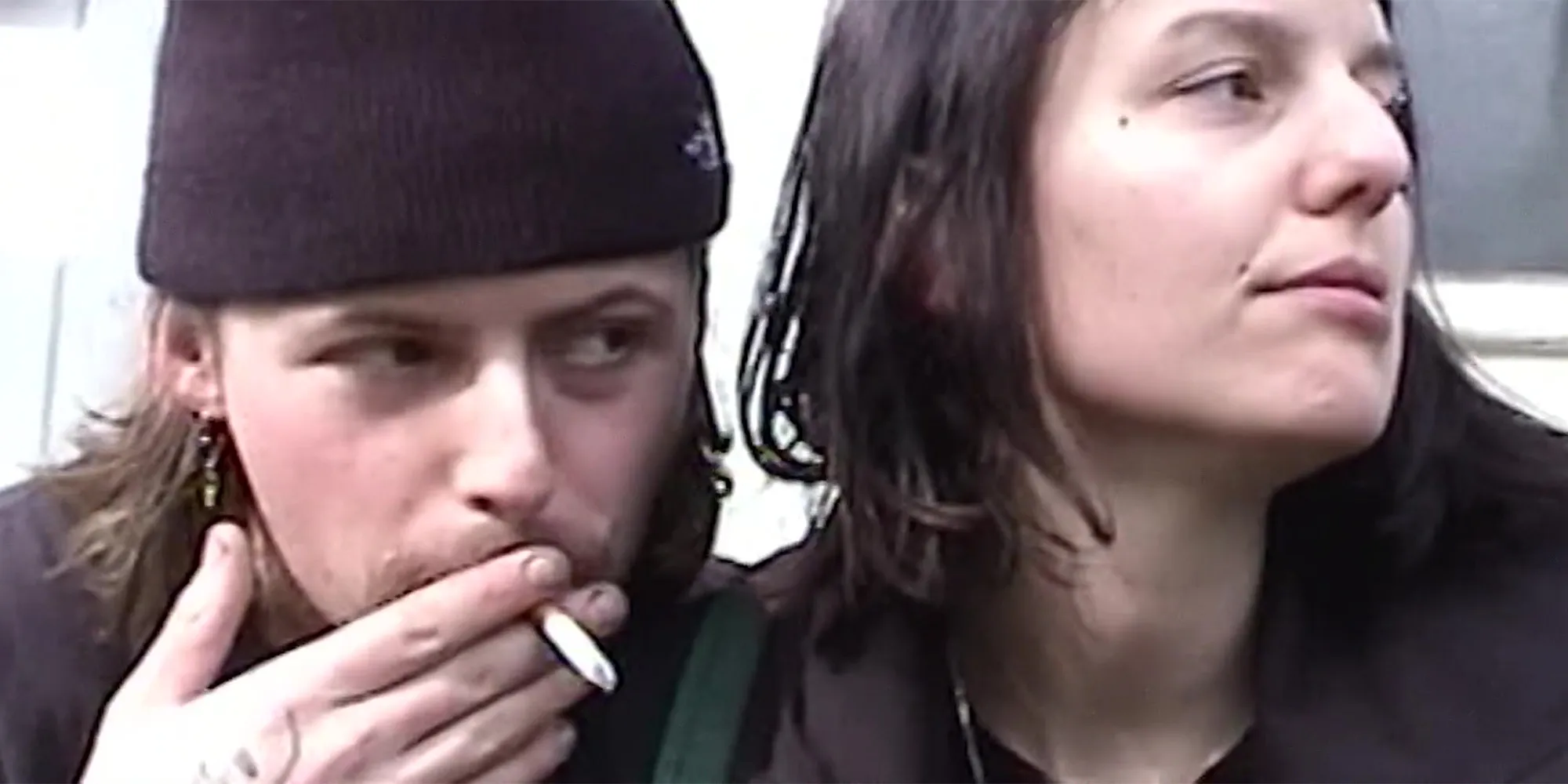
This last film isn’t a horror film, per se, though in its stark depiction of the quotidian heartbreaks of modern queer life, it’s maybe the scariest film in this dispatch. Canadian-born trans filmmaker Louise Weard’s “Castration Movie Chapter iii.ii Junior Ghosts—Premorphic Drift; a fragmentary passage” is the latest in her long-running saga of shot-on-video films depicting an expanding web of characters navigating the vagaries of queer and trans life, and at a comparatively sparse two hours (Chapter 1 is a four-and-a-half-hour affair), it’s easily the most accessible of the three. Well, ‘accessible’ is a relative term, given the heaviness of the subject matter, but like Weard’s other films, it pulls you into the cringe-inducing messiness of its characters in ways that make you feel for them all the same.
This chapter hones in on Izzy (Avalon Fast), a cis woman who leads an unfulfilling life answering calls at a suicide hotline from home. As we see, sitting with her for an agonizingly long time in one of Weard’s intimate, single-take scenes, this job isn’t easy, particularly when she fields calls from women still grieving the loss of friends and family in a mass murder event committed by an incel at a women’s support group a year ago. (It’s an event that has curious proximity to Izzy’s life, a detail that Weard expertly teases out over the course of the film.) As if that wasn’t hard enough, she soon learns that her unemployed, layabout boyfriend, Trent (Henri Gillespi), has decided, seemingly out of the blue, that he’s a trans girl, and wishes to go by “Tiffany.”
This development shakes Izzy’s worldview to the core, and as “fragmentary passage” progresses, we see her ostensible support for queer folks wane as soon as it affects her personally. She bristles at their tardiness to their anniversary dinner because Tiffany needs her help with mascara and makeup (choosing now to start experimenting with presentation); she’s forced to field questions from friends who found out about the same time she did, etc. It’s not long before she’s trawling Mumsnet forums and trading stories with her cis female friends about how Tiffany must be captured by some kind of online social contagion.
To her immense credit (and commensurate with the series), Weard never shies away from these perspectives, shining a harsh light on them and letting us sit in Izzy’s discomfort long enough to broadly understand where she’s coming from. Yes, she feels like a “trans widow”; yes, she is having trouble processing this immense, immediate change to her life that was sprung on her with a speed that doesn’t feel respectful to her. She’s not a lesbian; intimacy with Tiffany is impossible. And Weard’s claustrophobic, digital-video presentation doesn’t just make her low-budget efforts more economical to produce: It gives each long, well-considered scene much-needed immediacy.
The performances are astonishing, particularly Fast, who imbues Izzy’s every confused facial expression and avoidant dodge with a relatable frenzy. (Rest assured, we also get appearances from other “Castration Movie” characters, including a darkly comic sidebar featuring Weard’s Michaela, who wrestles with her own gatekeeping as she leads a trans support group where she’s far too tempted to neg the fashion journeys of recently-cracked eggs.) Weard’s unadorned, yet intimate photography and naturalistic directing make you feel like you’re watching a Gen-Z Cassavetes at work.
Amid its acid-tongued takes on deeply confused and unsympathetic people, though, Weard shows immense care and empathy for everyone involved, particularly Tiffany; transition is a deeply difficult decision, especially when you hope those you love will go along with you on your journey. That they don’t, or worse, even turn against you and make it about themselves, feels doubly tragic. “A fragmentary passage” is a triumph, somehow mixing everything from the terror of social transition to the different dangers of online radicalization (incels, TERFs) into a cohesive gumbo that feels reflective in its many fragments.